Naval defence journal El Snorkel recently published an analysis outlining how Argentina could restore credible submarine capability in the South Atlantic, drawing on Falklands War lessons to highlight the decisive role of underwater power. Authored by Italian Navy Admiral (R) Liborio Palombella, the article emphasises how Argentina’s shallow coastal waters and vast continental shelf favour modern compact submarines in dominating complex littoral environments; stressing that “The real weapon is to disappear.” Platforms like the DRASS DGK embody this principle: Extreme stealth: reduced acoustic, magnetic, thermal, and visual signatures; Analysis takeaway? In an era of increasingly transparent seas for maritime nations facing contested coastal environments, compact submarines may represent not a compromise, but the evolution of underwater strategy itself. —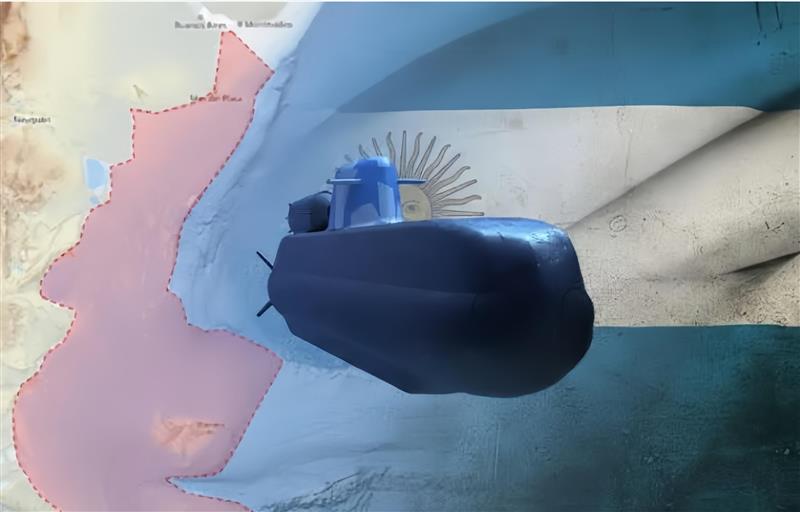
Full operational capability: torpedoes, sensors, communications, and modern combat systems;
Agility in shallow, complex waters: ISR, patrol, interdiction, special operations, and seabed missions;
Force multiplication: flotilla-level deterrence at a fraction of conventional SSK costs;
Rapid deployment: operational in 3–4 years with faster technology transfer and training.
Effective submarine power is not measured by size, but by persistence, survivability, and the ability to impose uncertainty on an adversary…
Bio: Liborio F. Palombella is a retired Italian Navy Admiral and Commander of the 500-ton Toti-class submarine ITS Dandolo and the 2000-ton Sauro-class submarine ITS Pelosi, as well as the anti-submarine warfare frigate ITS Scirocco and the destroyer ITS Duilio; later serving as Head of Operations at the Italian High Seas Fleet Command. He holds master’s degrees in Maritime and Naval Sciences, Political Science, and Strategic Studies.
DRASS DGK and the Return of Underwater Deterrence
Categories
Related Blogs

27 February 2026
Last week, Marco Bellomo, Technical Director at Drass, presented the SAVER System at the annual American Bureau of Shipping (ABS) Special Committee on Underwater Systems and Vehicles in Houston. A...
26 February 2026
DRASS Delivers Two Swimmer Delivery Vehicles to the Ministry of Defence of the Republic of Indonesia
In the first phase of an ambitious plan to enhance the underwater capabilities of the Indonesian Navy, Drass, a global leader in advanced underwater defence systems and submarine technologies, has...
23 February 2026
After an intensive week of hands-on dealer training, Charles-Indy Cadieux and his team at INDYAIR are now fully certified as Canada’s authorized D-ONE dealer and maintenance centre. A very big...